A solid wood guitar is a living object. Its wood responds to the air around it for its whole life, swelling a little in damp weather and shrinking in dry. Most of the care it needs comes down to keeping those changes small and slow.
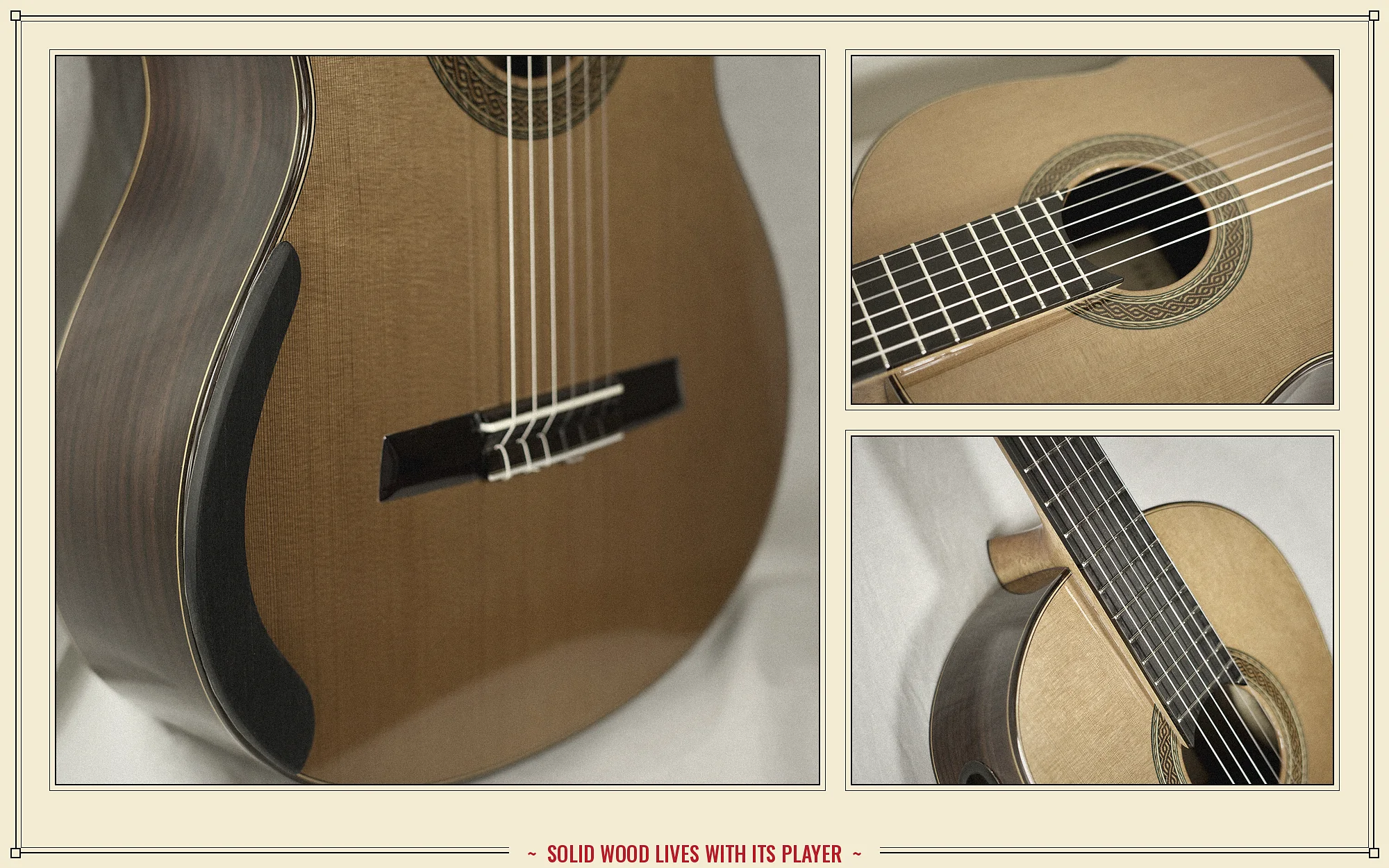
Humidity comes first
Keep the relative humidity around your guitar between 45 and 55 percent. Measure it with a hygrometer rather than guessing; the air in a heated room in winter is often far drier than it feels. Below about 40 percent for a long time, a solid top and back can shrink enough to crack. Above about 65 percent, the wood swells, the action rises and the sound becomes dull.
In dry seasons, use a humidifier in the room or a small humidifier in the case. In very damp weather, keep the guitar in its case with a humidity-control pack.
Temperature and travel
Avoid sudden changes of temperature. Never leave the guitar in a car, by a radiator or in direct sunlight. After bringing it in from the cold, leave it closed in its case for an hour or two so that it warms slowly. When flying, take the guitar into the cabin whenever the airline allows it.
Cleaning
Wipe the guitar after playing with a soft, dry cloth, especially the neck and the area under your forearm. Use a cleaner made for guitar finishes only occasionally, and never household products. Clean an ebony fingerboard when you change strings, with a barely damp cloth, and oil it lightly once or twice a year.
Strings
Change strings regularly: for a performer every few weeks, for a home player every two to three months. Replace them one at a time, so that the tension on the neck and top stays balanced. Fresh strings are the cheapest way to hear your guitar at its best.
Storage and service
When you are not playing, keep the guitar in its case. Have it checked by a luthier once a year: a small adjustment of the saddle or a look at the frets keeps it playing as it did on the first day. If you have any question about your Arrius, write to us.