Most concert classical guitars, including all of ours, have a scale length of 650 mm and a nut width of 52 mm. These measurements are a long-tested balance between sound and playability. A longer scale gives more tension and power; a shorter one is easier on the hand. A narrower nut is easier for chords; a wider one gives the fingers more room.
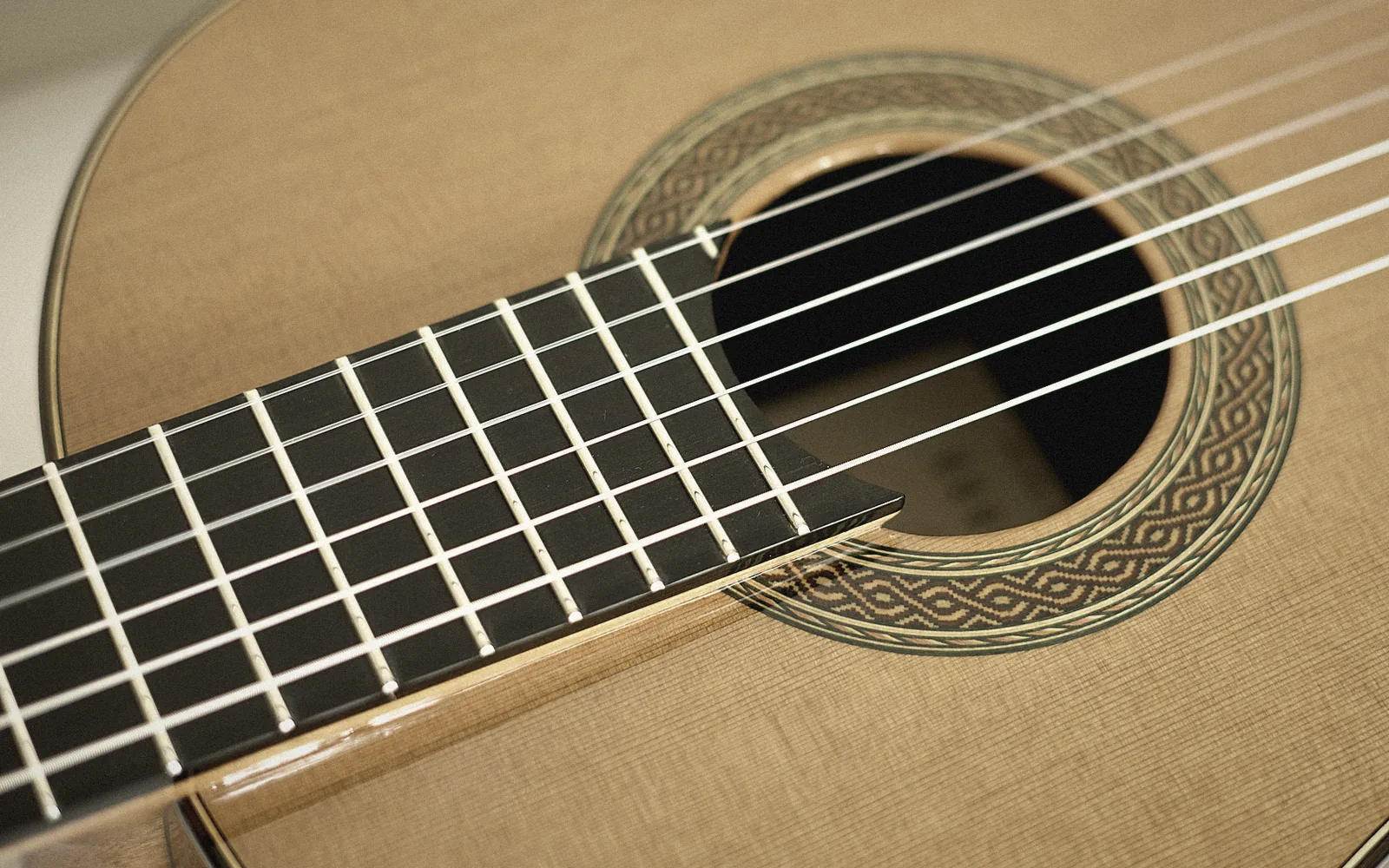
What scale length is
The scale length is the vibrating length of the string: the distance from the nut at the head to the saddle on the bridge. It decides how much tension a string needs to reach a given pitch, and how far apart the frets are.
Why 650 mm
The modern classical guitar took its shape in the nineteenth century in the work of Antonio de Torres, and his instruments are often close to 650 mm. The measurement became the standard because it gives enough tension for a full, projecting sound while keeping the stretches comfortable for most hands.
Longer scales, such as 660 mm, give more tension and power but make wide stretches harder. Shorter scales, 640 or 630 mm, are easier for smaller hands and for very stretched chords, with a little less tension and a slightly softer sound.
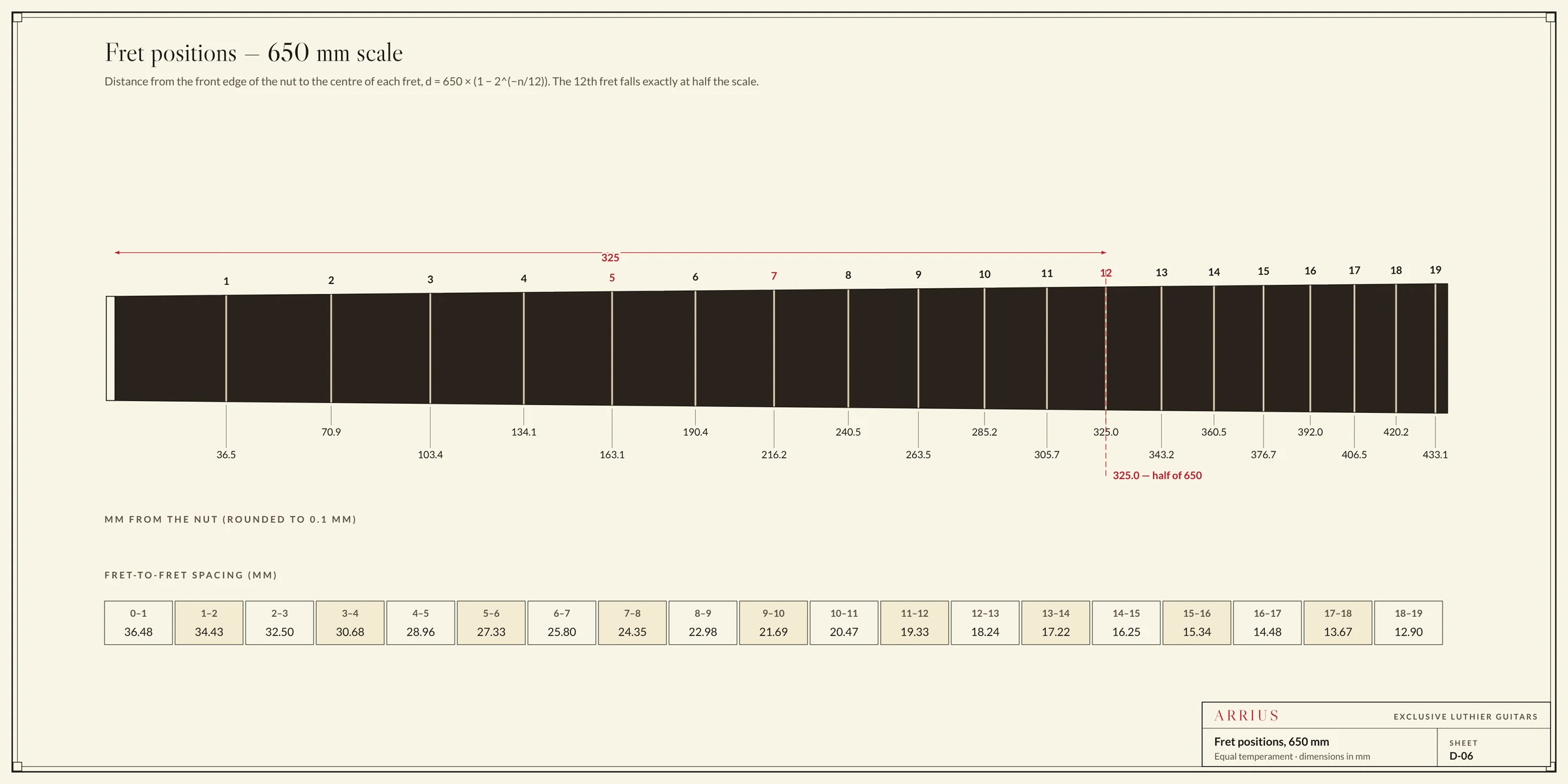
Why 52 mm at the nut
A classical guitar has a wider neck than a steel-string guitar, so that the fingers of the left hand can press each string cleanly and the right hand has space between the strings. A nut width of 52 mm is the classic measurement. Some modern guitars use 51 or 50 mm for players who come from steel-string guitars or have small hands.
Other dimensions that matter
Our classical guitars share the same body: 480 mm long, 370 mm wide at the lower bout, 280 mm at the upper bout and 100 mm deep. These are traditional proportions, so a player feels at home on any of our models from the first chord. What changes from model to model is inside: the top, the bracing and the woods. The MPR-5000, for example, adds a raised fingerboard and an additional resonance port to these proportions.
When a different size makes sense
If you have small hands, long stretches cause you pain, or you play mostly music with wide chords, a shorter scale or narrower nut may serve you better. Try before you decide, and remember that a good setup, with a well-adjusted action, can make a 650 mm guitar feel much easier than its numbers suggest.
Read next
- Fret positions for a 650 mm scale
- Playing above the 12th fret
- The raised fingerboard: why lift it above the top
Our key instrument: the Arrius MPR-5000, master-grade cedar and rosewood guitar with a resonance port, raised fingerboard and ebony armrest. More in the knowledge base.