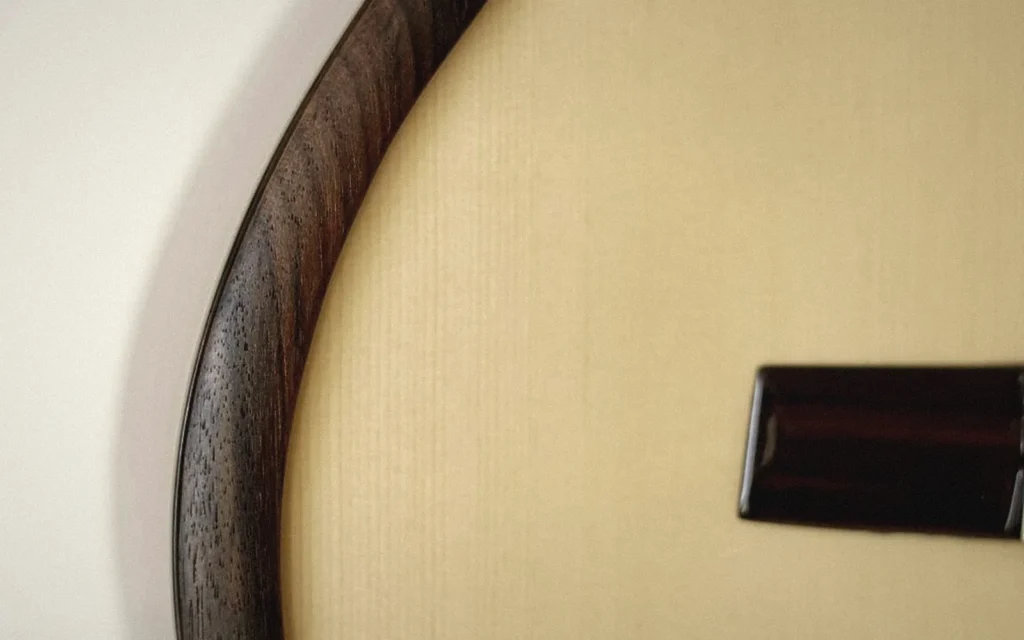
A double top is a soundboard made of two very thin layers of wood with a light core between them, usually a honeycomb of Nomex. The result is a top that is stiffer and lighter than a traditional solid top. In practice that means more volume, longer sustain and a quicker response, while the guitar still sounds like a classical guitar.
Where the idea came from
The double top was developed in Germany in the late 1980s, most notably by the luthiers Gernot Wagner and Matthias Dammann. They were looking for a way to make the guitar louder without making it heavier, a problem every guitar maker has faced since the instrument began to be played in large concert halls.
The answer came from engineering rather than from tradition. In aircraft and racing cars, a light core between two thin skins gives a panel great stiffness at very low weight. Applied to a soundboard, the same principle lets a top move more air for the same energy from the strings.
How it is built
Two skins of wood, each well under a millimetre thick, are glued to either side of a Nomex core. Nomex is an aramid material made into a honeycomb of tiny cells: it weighs almost nothing and does not soak up vibration. The finished sandwich is about as thick as a traditional top, but considerably lighter and stiffer.
The skins can be the same wood or two different ones. In our S-1000, one is cedar and the other spruce, which combines the warmth and easy response of cedar with the clarity of spruce.
What it changes in the sound
- Volume and projection. A lighter, stiffer top carries sound further. Double-top guitars are popular with soloists who play in large halls and with chamber musicians who must balance with other instruments.
- Sustain. Notes ring longer, which helps legato playing and slow, singing lines.
- Response. The guitar reacts to the lightest touch, so a quiet passage still carries.
What it does not change
A double top is not a shortcut to quality. A poorly built double top sounds loud and flat; a well built one sounds powerful and rich. The choice of woods, the bracing beneath the top and the work of the maker still decide the character of the instrument.
Some players find that the very long sustain needs a little adjustment in technique, especially in music where notes must be damped precisely. It is worth playing a double-top guitar for a while before you judge it.
Is it for you?
If you perform, compete, play with orchestras or ensembles, or simply want a guitar that fills a room without being forced, a double top is a natural choice. If you mostly play at home and love the intimate sound of a traditional guitar, a solid cedar or spruce top may suit you better. Read about cedar and spruce tops.
Caring for a double top
A double top needs the same care as any fine guitar: stable humidity between 45 and 55 percent, no sudden changes of temperature, and a case when it is not played. It is not more delicate than a traditional top. See our care guide.